
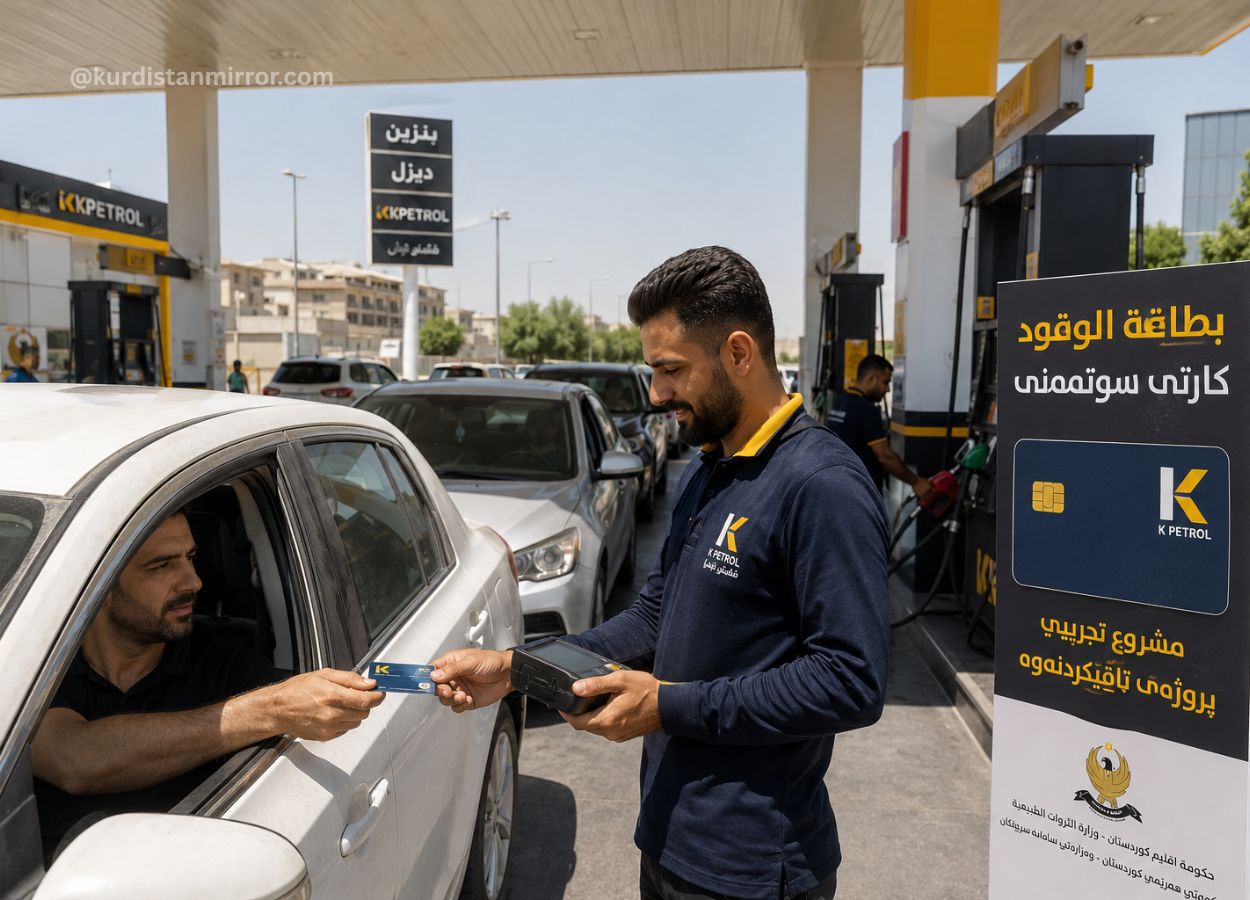

The Kurdistan Regional Government (KRG) has begun testing a new electronic fuel distribution system in Erbil as authorities seek to tackle persistent gasoline shortages and reduce long queues at filling stations across the city. The pilot programme, introduced on Monday, provides subsidised gasoline through a single service station using electronic fuel cards.
The Erbil Directorate of Oil and Minerals said the initiative is designed to improve the organisation of fuel sales while ensuring motorists have quicker access to subsidised gasoline.
Under the trial, regular gasoline is sold at 750 Iraqi dinars per litre, with each registered vehicle eligible to receive up to 40 litres using the electronic card already issued for household heating fuel. Officials said there is no need for residents to apply for new cards.

Authorities described the programme as a testing phase intended to identify technical or operational issues before deciding whether to expand it to additional filling stations. However, some motorists reportedly managed to obtain subsidised fuel more than once in a single day, prompting calls for stronger monitoring to ensure fair distribution. Officials said they are reviewing the system to prevent abuse while maintaining efficient service.
The pilot follows a fuel pricing policy introduced by the KRG last week to curb rising gasoline prices. The government capped regular gasoline at 850 dinars per litre, while setting maximum prices of 1,000 dinars for improved-grade fuel and 1,200 dinars for super-grade gasoline. The decision triggered fuel shortages in Erbil and Duhok after many filling station operators suspended sales, arguing that the regulated prices made operations financially unsustainable.
The fuel crisis has been linked to reduced imports from Iran, disruptions affecting regional energy infrastructure and limited crude oil allocations from Baghdad for domestic refining. KRG officials say the Kurdistan Region requires significantly more fuel than it currently receives and continue to press the federal government for increased crude supplies. Meanwhile, authorities are holding discussions with fuel station owners in an effort to restore stable supplies and bring the market back to normal.


